Benincà Group
Benincà Group chooses Sugar to optimize global process management and a diverse customer base
The Sugar effect
Unified
customer view
Improved
prospect management
Marketing–sales
alignment


Benincà Group chose Sugar to optimize the management of its global and diverse customer base. Founded in 1979 by the Benincà brothers, the company began as a specialist in automation systems for doors and gates and expanded over the years by introducing new solutions and businesses. Officially established as a group in 2009, it now includes six companies focused on automation systems, gate accessories, automatic bollards and access solutions, DIY automation kits, and automatic doors. With 11 commercial subsidiaries worldwide and a sales network of specialized distributors, installers, manufacturers, and security professionals, Benincà Group operates across a broad and international market.
The challenge
As the group expanded rapidly—adding more than 30 new employees since 2020 and increasing sales volumes—it faced growing challenges in managing and sharing customer information across departments.
The lack of an integrated system made it difficult to ensure consistent collaboration between marketing, sales, and after-sales teams, while a previous negative CRM experience underscored the risks of poor adoption, limited flexibility, and inadequate integration with the ERP system.
The solution
To address these challenges, Benincà Group implemented Sugar in partnership with OpenSymbol, selecting it for its flexibility, intuitive interface, and seamless ERP integration. The project was structured in clearly defined phases, with key users involved from the outset, tailored training to drive adoption, and documented workflows to ensure consistency across departments.
By centralizing customer data, integrating product catalog management, quotations, service tickets, and MailChimp for lead generation, Sugar enabled a unified, structured, and collaborative approach to managing customer relationships across the entire group.

“Before adopting the CRM, it was difficult to envision such close alignment between marketing and sales activities because there was no tool that allowed us to work hand in hand and fine-tune initiatives to achieve increasingly precise and shared goals. It is a real success."
VALENTINA A., Marketing Manager, Benincà Group
Benincà Group chooses Sugar to optimize global process management and a diverse customer base
The story began in 1979 at the initiative of the Benincà brothers with the establishment of the historic company of the same name, specializing in automation systems for doors and gates. Over the years, the business expanded by seizing market opportunities and integrating new solutions, progressively broadening its offering. This growth took place through the creation of new business entities, which today form the current group structure.
The group was officially established in 2009 and includes six companies: the parent company Automatismi Benincà; CAB, specializing in automation systems for doors, garage doors, and gates; Hi-Motions, accessories for gates; RISE, automatic bollards, turnstiles, and pedestrian access gates; BYOU, automation kits for the DIY market; and Myone, automatic swing and sliding doors.
The group also operates 11 commercial subsidiaries worldwide: Bulgaria, France, India, Poland, Portugal, the United Kingdom, the Czech Republic, Spain, the United States, the Dominican Republic, and Australia.
Its sales network includes specialized distributors, installers, door and gate manufacturers, window and door fabricators, and security specialists.
Over the years, the group approach increasingly highlighted the need for integrated information management. When the idea of adopting a CRM solution emerged, it was driven by the strong belief that sharing activities and opportunities could further improve the synergies that characterize the group.
Choosing the CRM software
The analysis began with the need to improve certain aspects of information sharing, prompted by rapid growth in both sales volumes and internal structure. Since 2020, more than 30 new employees have joined the company, mainly in sales and customer support roles.
This evolution further strengthened the need for a tool capable of comprehensively managing all customer-related information, sharing it across different departments (marketing, sales, after-sales service), and enabling integrated yet flexible management that could adapt to the changes the group faces along its growth path.
The evaluation process started at the beginning of 2020 and involved several vendors. There had been a brief previous experience with a CRM, so vendor selection focused on factors such as flexibility and the ability to integrate with the ERP system, which had recently been replaced.
Sugar entered the evaluation after the group became acquainted with OpenSymbol, a company based in Vicenza that was recommended by Luigi Benincà, one of the two company founders.
“OpenSymbol gathered our requirements and proposed SugarCRM as the solution, both for its compatibility with our ERP system and for the broad customization possibilities of certain modules,” explains Valentina Ambrosini, Marketing Manager at Benincà Group.
After evaluating and comparing the different solutions, “Sugar was selected for its extremely intuitive interface, extensive customization capabilities, and for the availability, expertise, and professionalism of the OpenSymbol consultants, with whom we immediately established a strong rapport, also regarding the choice of the cloud solution in collaboration with the company’s IT management,” concludes Valentina Ambrosini.
Implementing Sugar
The previous negative experience with a CRM software helped avoid past mistakes and focus the implementation on the most important functionalities for the group. The project began with a clear definition of key users and involved the entire working group in creating a list of necessary functionalities, ensuring that the new information management workflow would be widely shared across the company.
The next step was identifying an internal figure responsible for training, with the goal of creating a shared and consistent adoption process that could also be tailored to individual needs.
During this training phase and through discussions between users and those involved in the new CRM processes, it was possible to further refine the implementation, leveraging the experience of the employees involved.
Following this activity, the team began drafting an internal manual summarizing all decisions regarding the system architecture and documenting the new information management workflows, so they could become a company asset and be shared even more broadly within the organization.
Once the objectives analysis and software customization phase were completed, the actual CRM project began. To manage the implementation process more effectively, the project was divided into three distinct phases. The first two phases have been completed, while the third phase—covering the integration of quotations and service tickets—will be completed within a couple of months.
At this stage, the unified view of customers and sales opportunities has made it possible to set up recurring and monitoring activities, and the first positive results already suggest how analytical capabilities—and consequently service quality—will improve once the project is fully completed.
OpenSymbol supported the internal team with several specialists who helped define requirements, analyze the situation, develop the prototype, and then adapt and integrate the CRM with the company’s systems.
“In all phases of the project, the people involved proved competent, available, and professional; it was truly a strategic collaboration,” explains Valentina Ambrosini. “We were able to leverage the partner’s best practices to optimize our processes.”
Sugar’s strengths
The adoption of the CRM reduced redundancy in certain operations and helped establish new activities, while also defining shared and common rules for managing them. The CRM promotes a shared way of working based on recurring activities. Although this may initially be perceived as an additional burden compared to normal operations, in the medium to long term, the results demonstrate how a more structured approach helps reduce overall complexity and improve performance across the organization.
“A practical example of these benefits is the management of a trade fair in Nuremberg, where the new contact management workflow was used through a business card scanning app connected to the CRM. This allowed us to collect data more quickly, distribute prospect management efficiently, and follow up immediately after the event, with excellent results,” says Marketing Manager Valentina Ambrosini.
“In the past, the same activity—managed with traditional paper-based tools—caused difficulties in interpreting the recorded data, slowing down the entire process and inevitably leading to lost opportunities due to disorganized prospect management.”
“In the past, the same activity caused difficulties in understanding the recorded data and slowed down the entire process, with the inevitable loss of opportunities due to unstructured prospect management.”
— VALENTINA A., Marketing Manager, Benincà Group
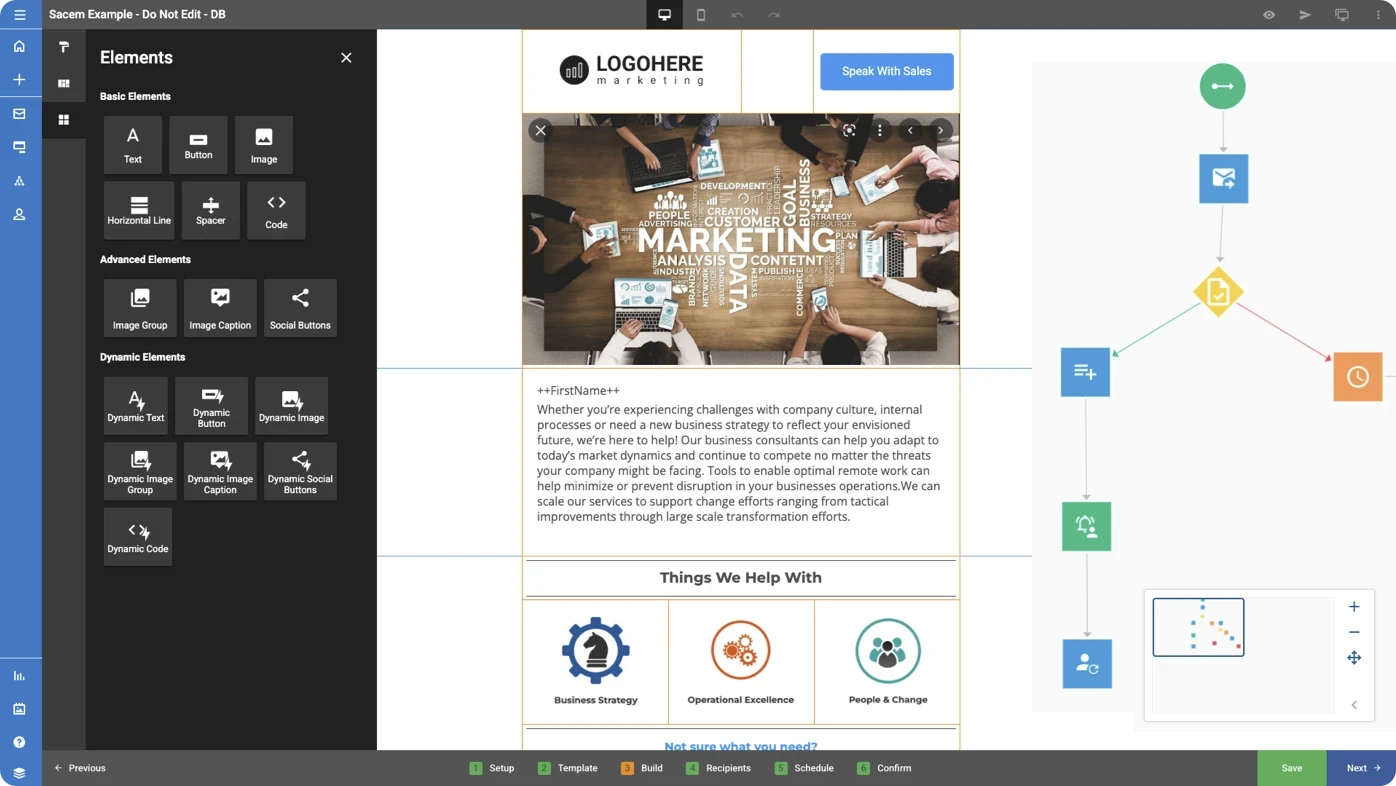
Today, all product catalog-related activities have been integrated, with the ability to manage quotations and monitor opportunities, including lead management and related activities. MailChimp has also been integrated for lead generation campaigns.
The improvement in prospect management compared to the past is evident, and this has also enabled the group to begin consistently managing all contacts who interact with any of the group’s companies, regardless of how the interaction occurs, benefiting all brands.
In particular, the marketing team has used the new functionalities to better support sales activities by investing in brand awareness campaigns with clearly defined lead generation objectives.
“Before adopting the CRM, it was difficult to envision such close alignment between marketing and sales activities because there was no tool that allowed us to work hand in hand and fine-tune initiatives to achieve increasingly precise and shared goals. It is a real success,” concludes Valentina Ambrosini.
Sugar enables Benincà Group to provide more comprehensive service to its customers by offering multiple solutions backed by the reliability of an international group. This group-wide vision must also be pursued in terms of service quality—and this is precisely where the CRM becomes essential, through centralized customer management and the evaluation of customer potential from a group-wide perspective.